Credits
Every photograph on this site
Licences were checked on each Wikimedia Commons file page on 17 November 2026. CC BY-SA images, if any appear, are used on the website only, and are not placed in the downloadable fact sheets.
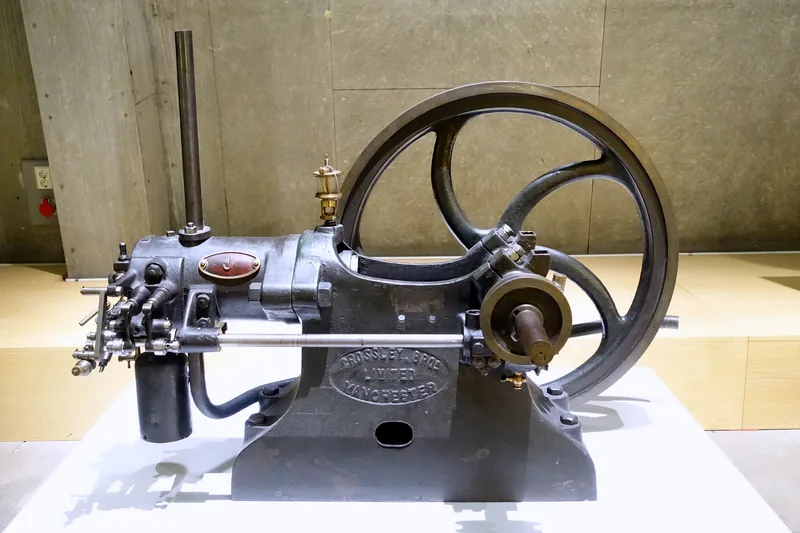
A Crossley Brothers four-stroke coal-gas engine, based on Otto’s design, object TM7415 at the Tekniska museet in Stockholm, photographed by Daderot on 16 September 2014. It is a later Crossley engine, not Nikolaus Otto’s 1876 prototype. NASA says the Wright brothers’ design was based on early automobile engines that used the Otto cycle, developed by Dr N. A. Otto in 1876. The file is CC0 1.0. Photo: Daderot, 16 September 2014 · CC0 1.0 · Wikimedia Commons 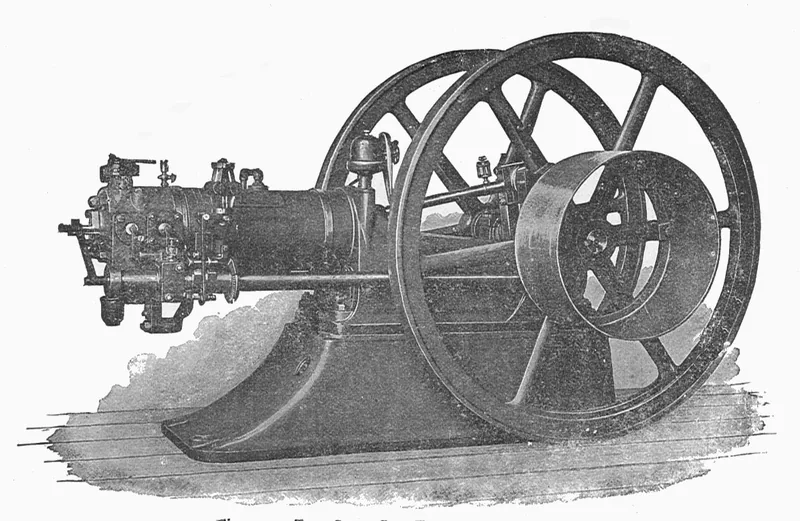
A horizontal Otto gas engine, a plate from Nehemiah Hawkins’s New Catechism of the Steam Engine, 1904, scanned by Andy Dingley. It is a book illustration, not a photograph of a surviving engine. The file is in the public domain. Photo: Plate from Nehemiah Hawkins, New Catechism of the Steam Engine, 1904. Scan: Andy Dingley · Public domain · Wikimedia Commons 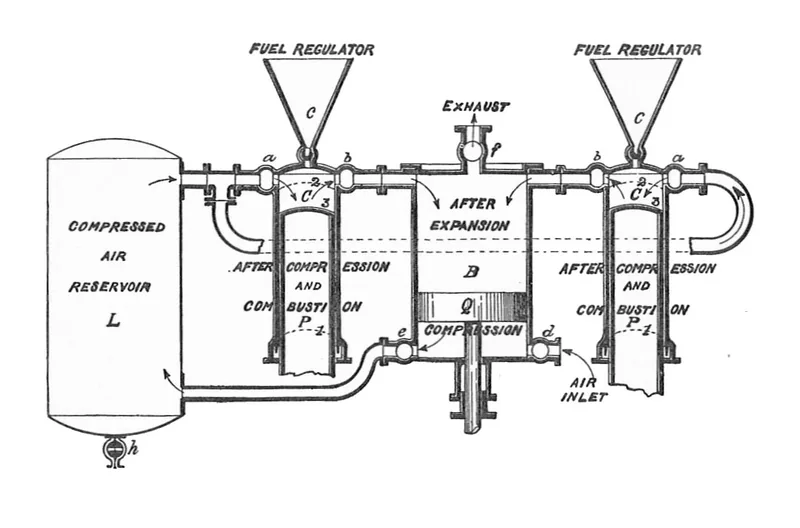
An early Diesel engine with air-blast injection, illustrated by Rankin Kennedy in 1903 and scanned by Andy Dingley. It is a book illustration, not a photograph of a particular surviving engine. The file is in the public domain. Photo: Rankin Kennedy, Electrical Installations, Vol III, 1903. Scan: Andy Dingley · Public domain · Wikimedia Commons 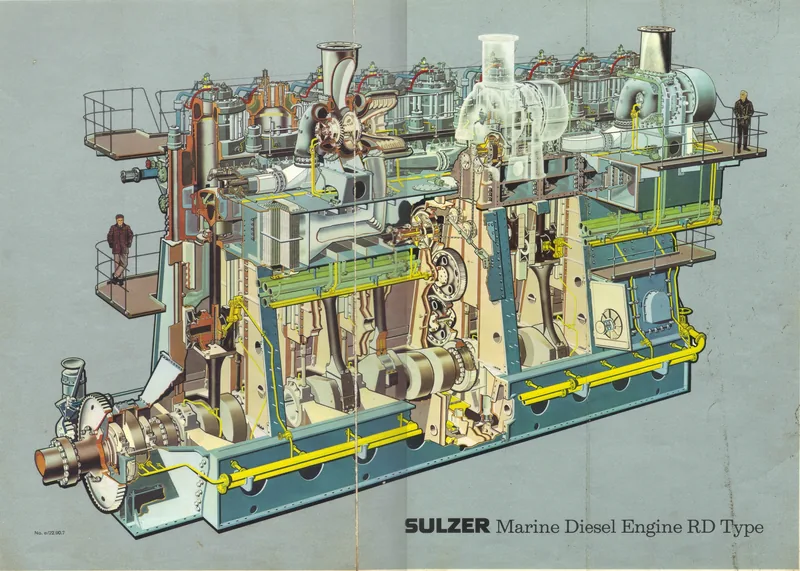
A Sulzer RD marine diesel engine, in a photograph released by Sulzer AG. The file is in the public domain. This site does not attach a further official power or date to the picture beyond the file’s own identification. Photo: Sulzer AG · Public domain · Wikimedia Commons 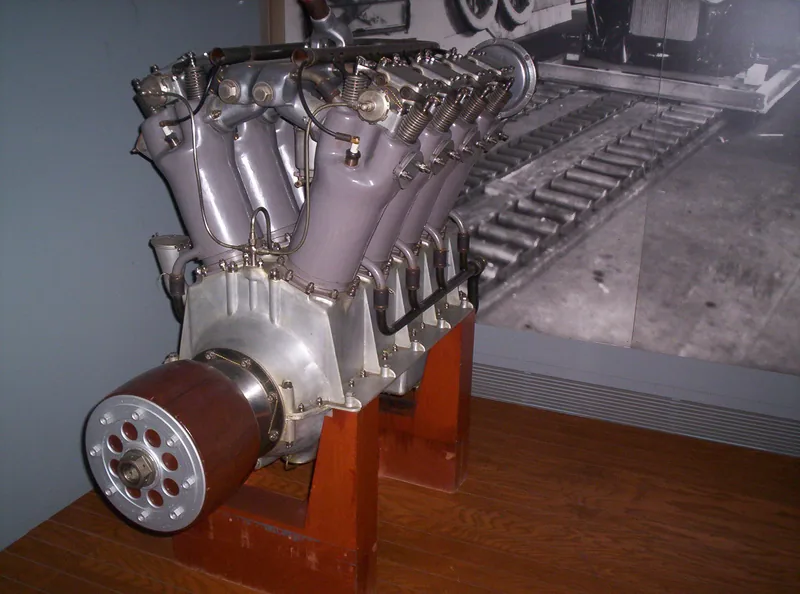
A Liberty aircraft engine, identified on the Commons file as Liberty Aircraft Engine Number 1. The photographer is not named on the file page. The file is in the public domain. This site does not add a further official story to the picture beyond that identification. Photo: Photographer not named on the Commons file · Public domain · Wikimedia Commons 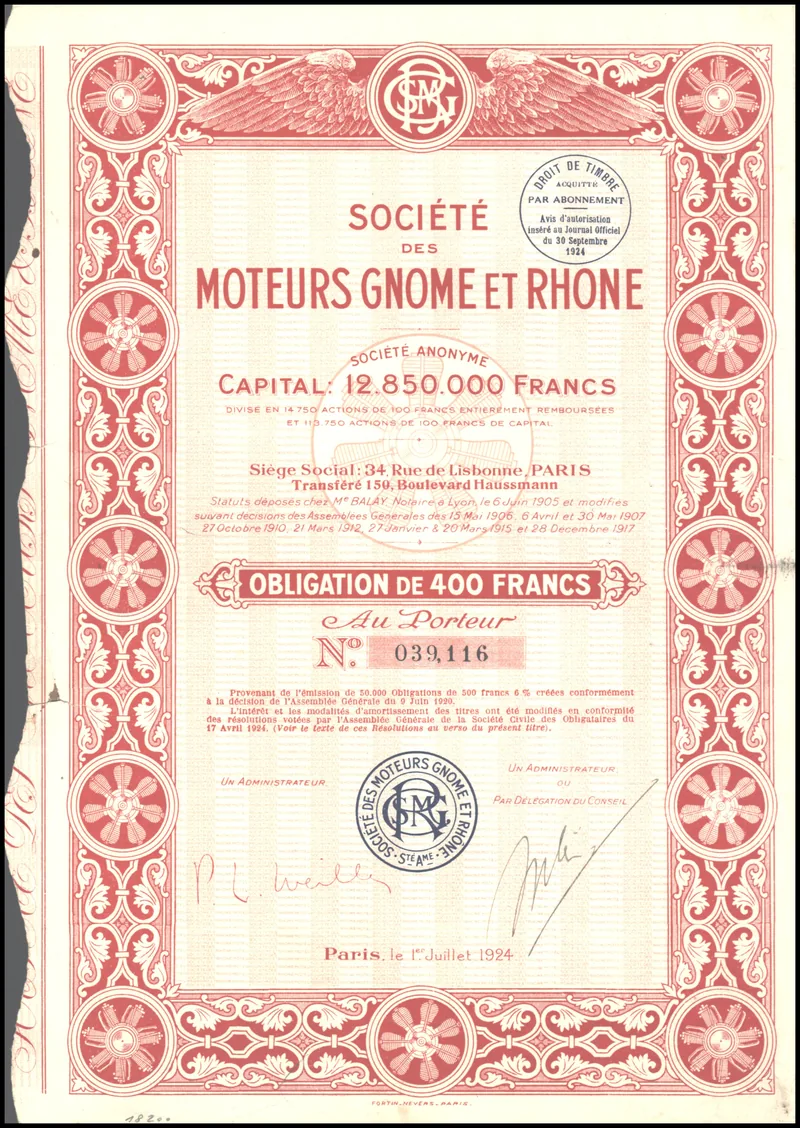
A 1924 plate of Gnome et Rhône aero engines, scanned by EDHAC e.V. It is a catalogue illustration, not a photograph of a single surviving engine. The file is in the public domain. Photo: Unknown authors and graphic artists; scan by EDHAC e.V. · Public domain · Wikimedia Commons 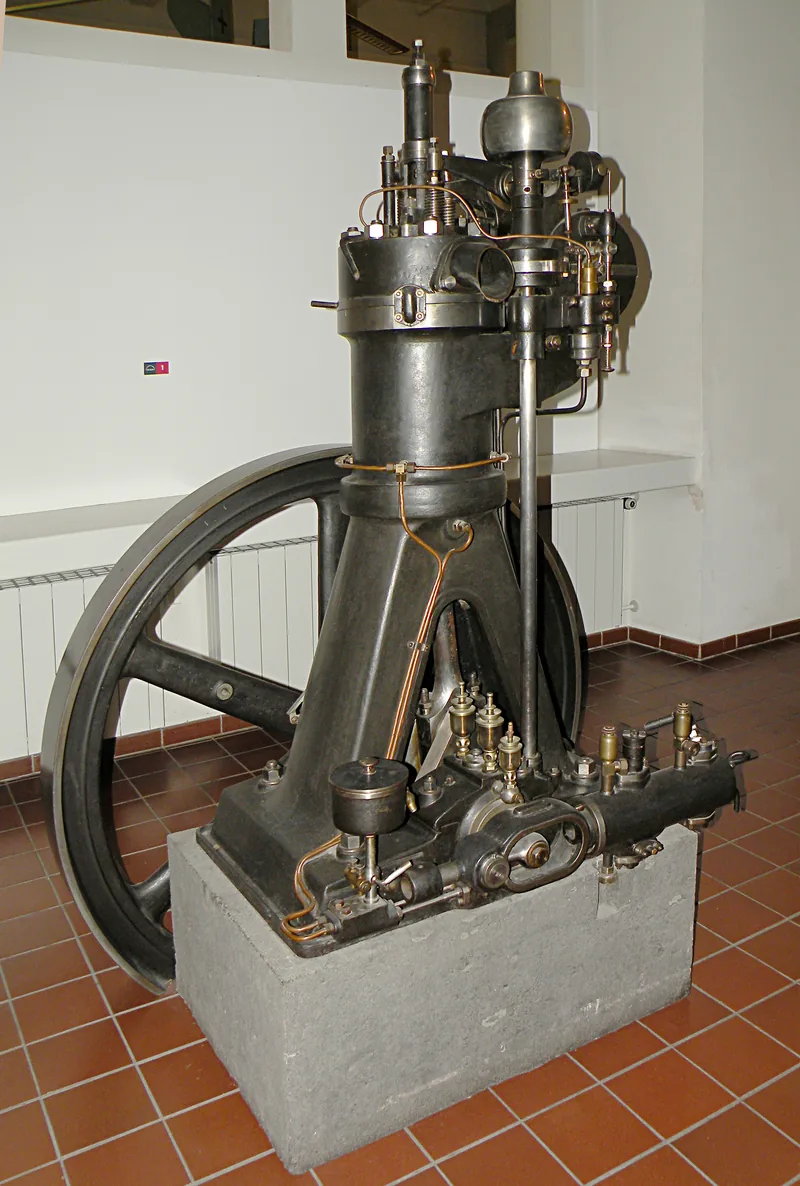
An early Diesel engine photographed by Vitold Muratov. The Commons file is titled “First Diesel motor”; this site does not treat that title as an official claim that the machine is Diesel’s first prototype. The file is CC BY-SA 3.0 and is used on the website only, not in the typographic fact sheets. Photo: Vitold Muratov · CC BY-SA 3.0 (website only) · Wikimedia Commons 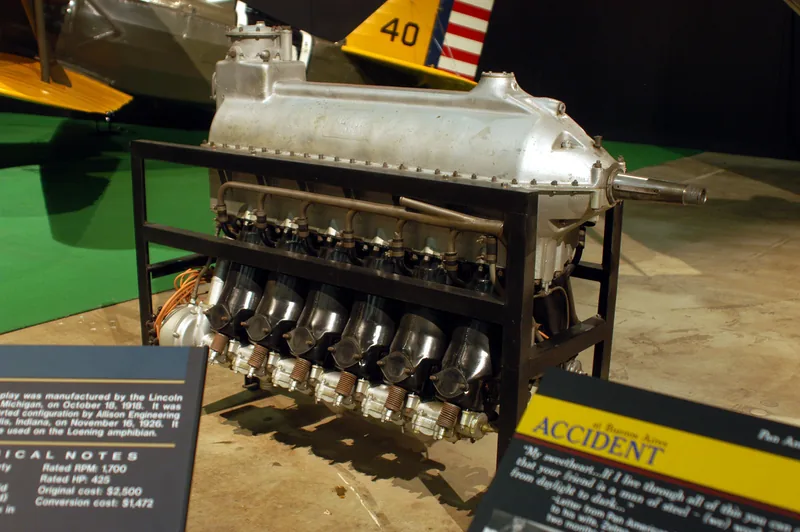
A Packard V-1650 aero engine, identified on the Commons file as a Liberty 12-A inverted, and marked as a USAF photograph. The photographer is not named on the file page. The file is in the public domain. This site does not add a further official story beyond that identification. Photo: Photographer not named on the Commons file; uploaded by Stahlkocher · Public domain · Wikimedia Commons 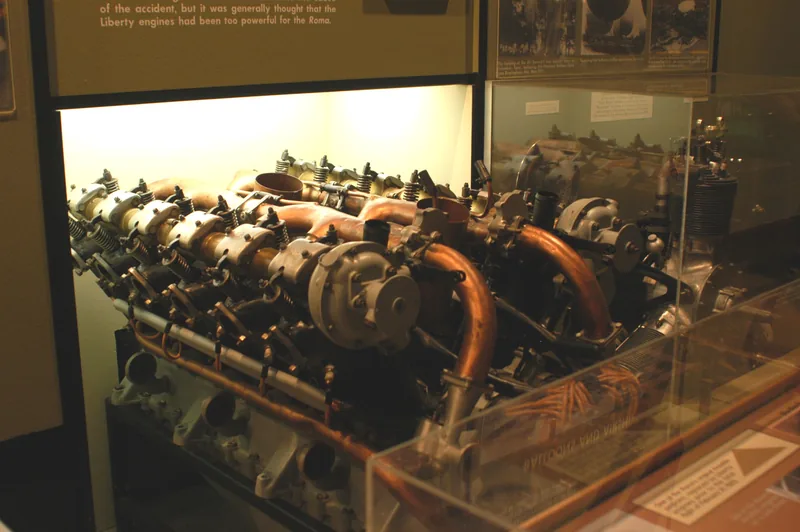
An Ansaldo V-12 aero engine, identified on the Commons file as coming from the airship Roma. The photographer is not named on the file page. The file is in the public domain. This site does not add a further official story beyond that identification. Photo: Photographer not named on the Commons file · Public domain · Wikimedia Commons 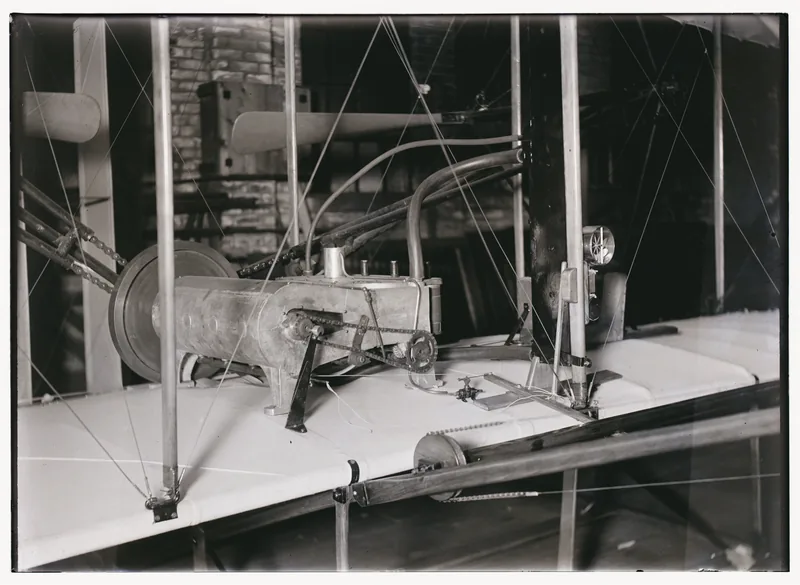
The central engine section of the 1903 Wright Flyer, photographed in the shop on 1 January 1928, before shipment to the Science Museum in London, and attributed to Orville Wright. Library of Congress digital ID ppprs.00651. It is a 1928 photograph of the 1903 motor, not a photograph taken in 1903. NASA says that engine made about 16 horsepower when first started, and about 12 horsepower when it was running hot. The file is in the public domain. Photo: Attributed to Orville Wright, 1 January 1928. Library of Congress, digital ID ppprs.00651 · Public domain · Wikimedia Commons
Enjoyed this piston-engine desk?
No pop-ups. No intrusive advertising. Just interesting stuff. A little support helps the next mechanics.im site get built.