Two kinds
A spark, or hot air and a measured spray
The Department of Energy draws a clean line through the engines “currently in production.” One kind waits for a spark. The other compresses air until it is hot enough, then sprays in the fuel and lets that be enough.
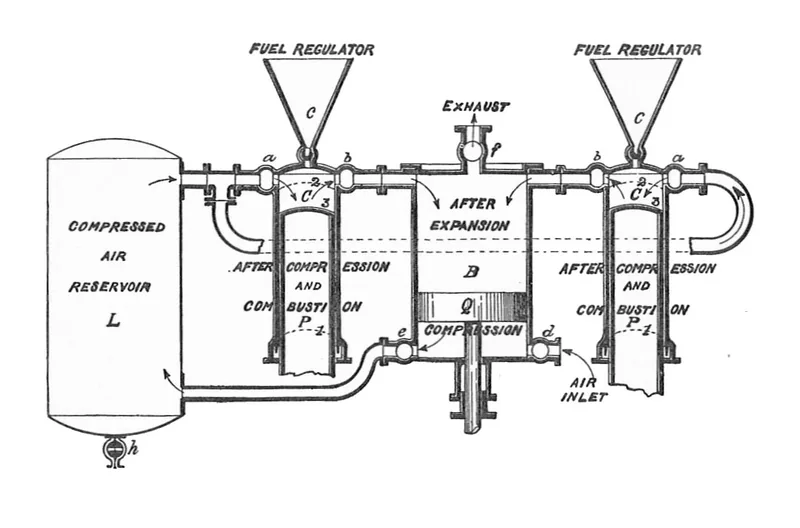
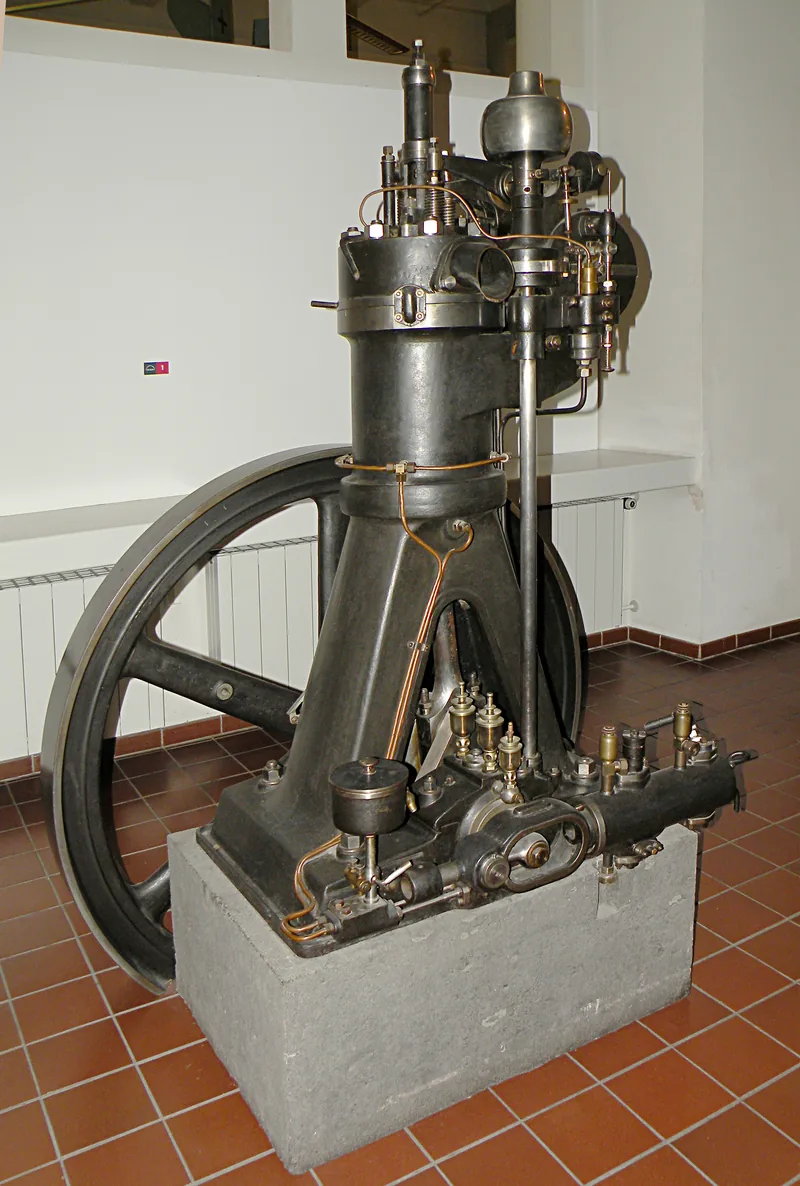
Two kinds of engine, in official wording
The U.S. Department of Energy says there are two kinds of internal combustion engines currently in production: the spark ignition gasoline engine and the compression ignition diesel engine. The two columns keep that page’s wording.
| Spark ignition (gasoline) | Compression ignition (diesel) | |
|---|---|---|
| What is inducted | Fuel is mixed with air and then inducted into the cylinder during the intake process. | Only air is inducted into the engine and then compressed. |
| How it ignites | After the piston compresses the fuel-air mixture, the spark ignites it, causing combustion. | The engine sprays the fuel into the hot compressed air at a suitable, measured rate, causing it to ignite. |
| The shove | The expansion of the combustion gases pushes the piston during the power stroke. | The same official page describes combustion after that measured spray of fuel into hot air. |
The Department of Energy groups “combustion and power stroke” as one of four processes. NASA names four piston strokes — intake, compression, power, exhaust — and treats combustion as a rapid event at the start of the power stroke. Those two official groupings are kept apart. The figure notes live on the sources and field-notes pages.
“In an internal combustion engine (ICE), the ignition and combustion of the fuel occurs within the engine itself. The engine then partially converts the energy from the combustion to work. The engine consists of a fixed cylinder and a moving piston. The expanding combustion gases push the piston, which in turn rotates the crankshaft.” [source]
Spark ignition and compression ignition, the same page says, “differ in how they supply and ignite the fuel.” In the spark-ignition engine, “the fuel is mixed with air and then inducted into the cylinder during the intake process. After the piston compresses the fuel-air mixture, the spark ignites it, causing combustion. The expansion of the combustion gases pushes the piston during the power stroke.” In a diesel engine, “only air is inducted into the engine and then compressed. Diesel engines then spray the fuel into the hot compressed air at a suitable, measured rate, causing it to ignite.” [source]
Dugald Clerk, in the 1911 Encyclopaedia Britannica article “Oil Engine,” had already lingered on how strange Diesel’s version looked. Air alone on the charging stroke; compression “generally to over 400 ℔ per sq. in.”; air raised “to incandescence”; oil injected “by a small portion of air compressed to a still higher point.” “The oil ignites at once as it enters the combustion space, and so a power impulse is obtained, but without explosion. The pressure does not rise above the pressure of air and oil injection.” [source]
Clerk called two features “very original”: compression pressures “very much higher than those used in any other internal combustion engines,” and the dispensing with “the usual igniting devices by rendering the air charge incandescent by compression.” In 1911 he wrote that the engine was “made on the continent, in England and in America in sizes up to 1000 H.P.” That is 1911 wording, not a modern rating. [source]
Collier’s New Encyclopedia, in 1921, gave a different official pair of figures and is kept beside Clerk rather than averaged with him. In the four-stroke Diesel, “air is drawn into the cylinder on the first stroke, and is compressed on the second stroke to a pressure of 450 pounds per square inch. This sudden increase in pressure causes a rise in temperature to about 550 degrees C, and during part of the third stroke, oil is injected, and, owing to the high temperature, ignites.” Collier’s also says the engine was made in two types, four-stroke and two-stroke. [source]
Clerk also reported a test, calculated from a 500 B.H.P. Diesel oil engine examined by Michael Longridge: three cylinders, 22.05 in diameter, 29.52 in stroke, each on the “Otto” cycle; indicated power 595 horse, brake 459, mechanical efficiency 77%, indicated thermal efficiency 41%, brake thermal efficiency 31.7%. Those figures belong to that test only. [source]
Enjoyed this piston-engine desk?
No pop-ups. No intrusive advertising. Just interesting stuff. A little support helps the next mechanics.im site get built.